Why Pune is one of India's most sought-after cities for homebuyers
Published 26 September 2026 · 3 min read · By Prima Group
Pune has been called the Oxford of the East and the Detroit of the East. Both nicknames point to the same reality: a city that combines education, industry and technology, and keeps drawing people who want to live and work here.
A large and growing base
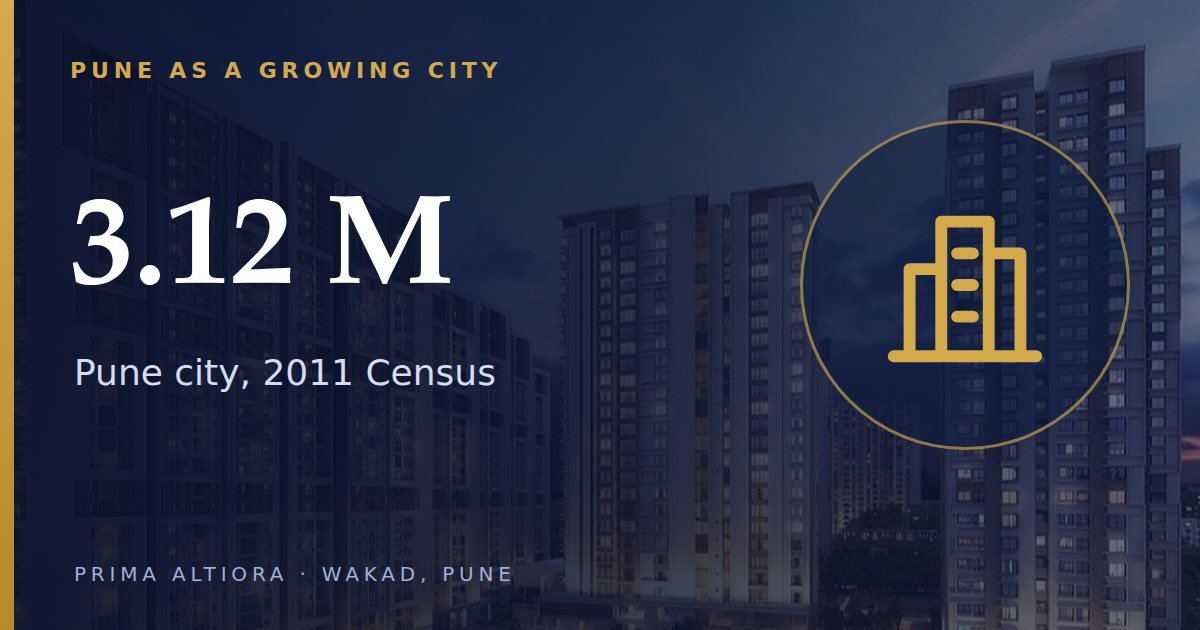
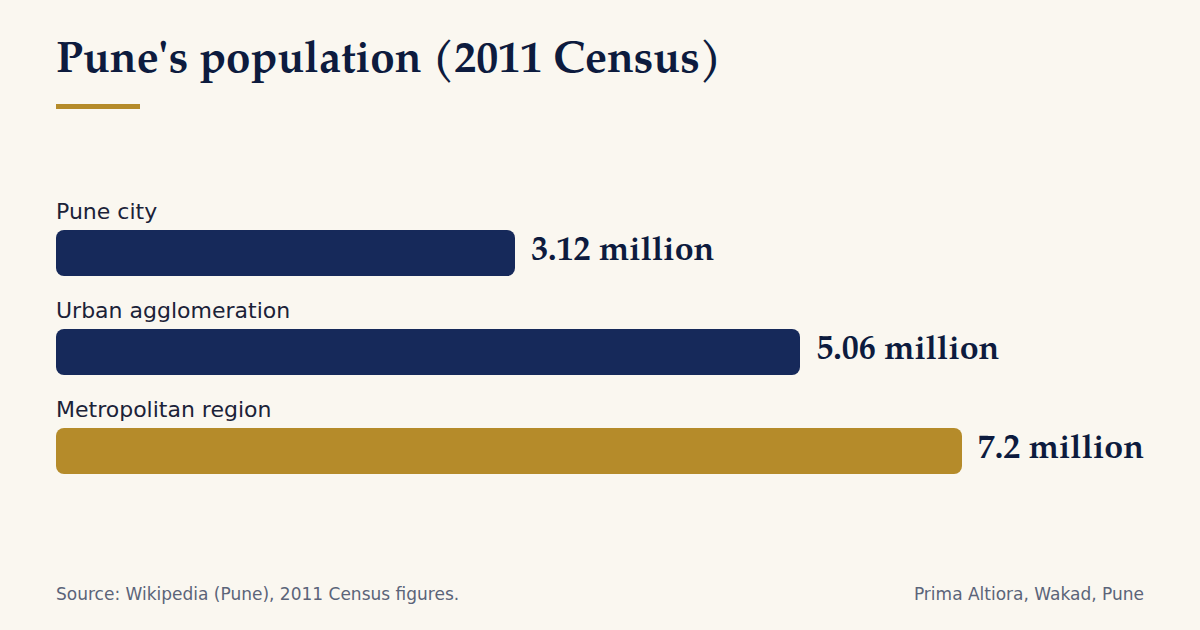
At the 2011 Census, Pune city had a population of about 3.12 million, the urban agglomeration about 5.06 million and the wider metropolitan region around 7.2 million. Those numbers have grown since, and the city's suburbs, including Wakad, Hinjewadi and Pimpri-Chinchwad, have absorbed much of the growth.
Pune's population at the 2011 Census.
An economy with more than one engine
Pune's major industries are information technology, automobile manufacturing, education and pharmaceuticals or vaccines. The district's nominal GDP for 2019-20 was about Rs 3.31 lakh crore, the third largest contribution to Maharashtra's economy, and Pune is described as having the fifth largest metropolitan economy in India.
Having several sectors matters for homebuyers. Demand for housing depends on people having jobs, and a mix of employers makes the market less dependent on any single industry.
Education and talent
Savitribai Phule Pune University is described as the largest in India by number of affiliated colleges, and the city is home to more than nine deemed universities. Students who study here often stay for work, which feeds both rental and ownership demand.
Lifestyle and connectivity
Pune offers a moderate climate, green hills around the city, a strong food and cultural scene and quick highway access to Mumbai. For families, the combination of schools, hospitals and open spaces is a big part of the appeal.
West Pune, where Wakad sits, is close to the largest IT cluster, and our guide to living in Wakad explains why the neighbourhood has become a preferred address.
What this means for a homebuyer
A city with several strong sectors tends to have steadier housing demand than a single-industry town. Pune's mix of technology, manufacturing and education means people arrive for different reasons and at different life stages, which supports demand for 2 BHK and 3 BHK homes alike.
It also means competition for good locations. Neighbourhoods with strong connectivity, schools and hospitals usually see the most interest, which is why micro-market research matters as much as the city story.
Interested in Prima Altiora, Wakad?
Premium 2 & 3 BHK homes in Vinode Nagar, Wakad, starting at ₹1.09 Cr*. Get the price sheet, floor plans and brochure from our team.
Before you decide
A strong city does not guarantee that every project or every micro-market performs the same. Compare specific projects on price per square foot, developer track record and possession timeline, not just on the city's reputation.
Frequently asked questions
Why do people move to Pune?
Jobs in IT, manufacturing and education, a moderate climate, and access to Mumbai are common reasons. Pune is also home to a large student population.
Is Pune a good city for real estate investment?
Pune has a diverse economy and steady end-user demand, but returns vary by micro-market and project, so compare specific locations and developers.
Which part of Pune is close to the IT hub?
West Pune, including Wakad, Baner and Balewadi, is close to Hinjewadi's Rajiv Gandhi Infotech Park, the city's largest IT cluster.
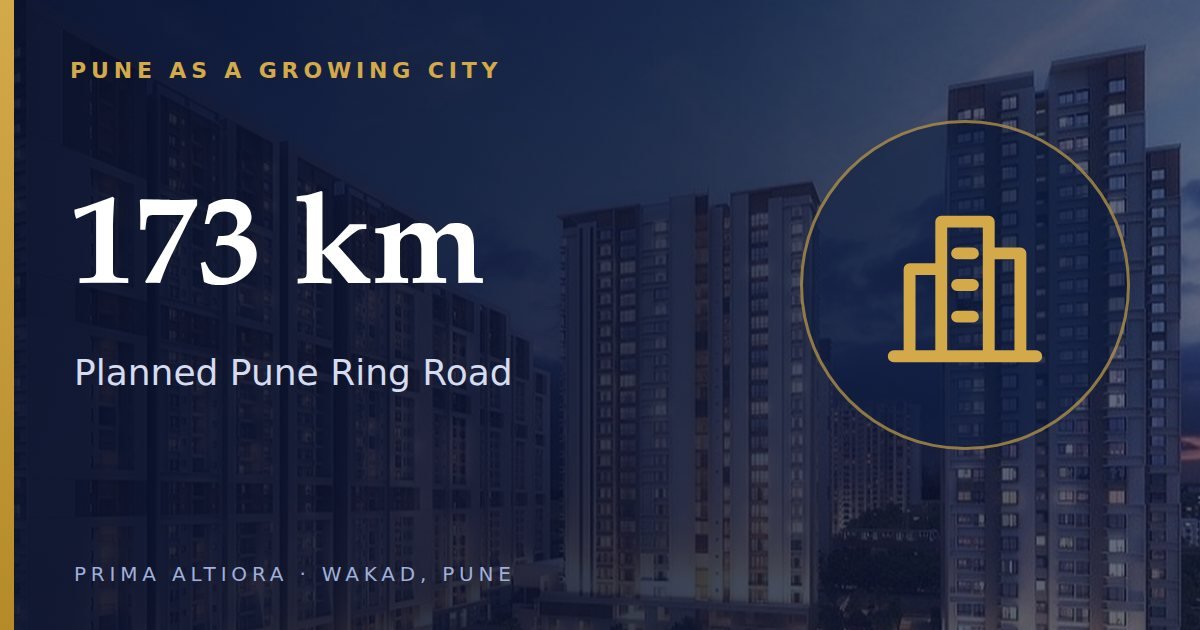
A plain-language look at the Pune infrastructure projects that matter to homebuyers: Metro Line 3, the Ring Road, Expressway Missing Link and Purandar Airport.